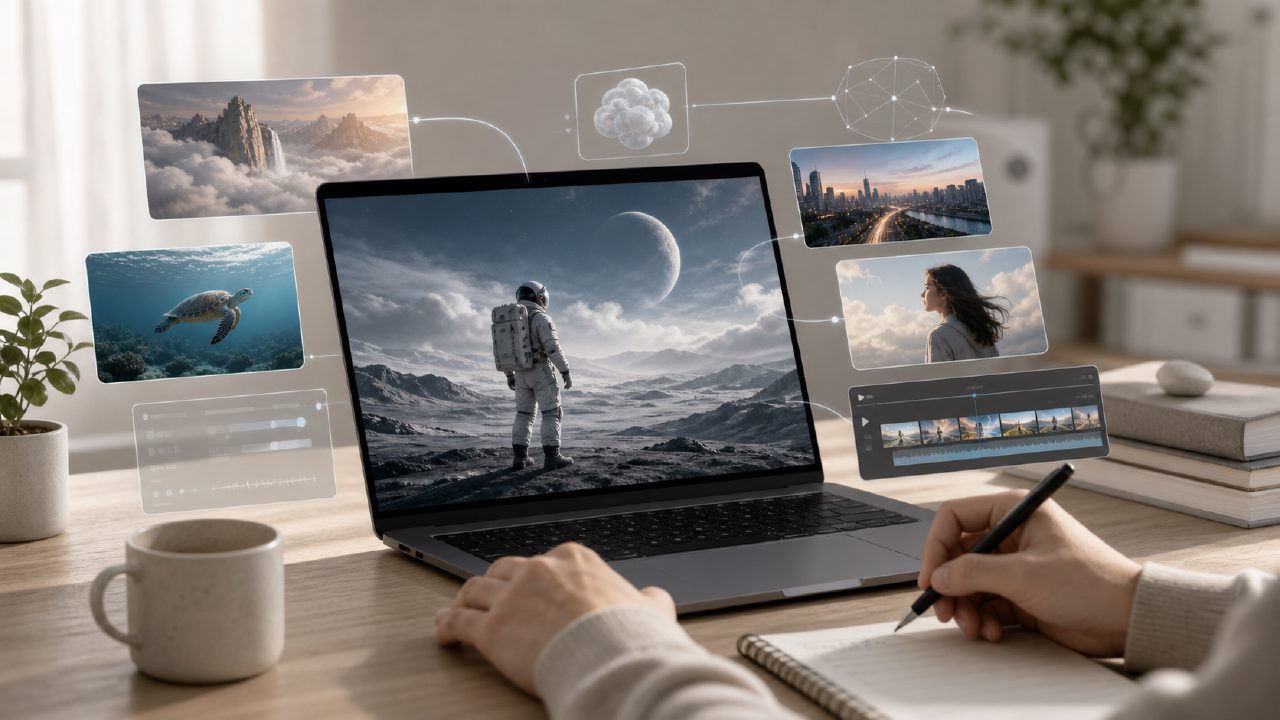
Anyone working with AI video has recently come across a term that's impossible to ignore: OpenAI Sora access. But frankly, most so-called 'open access' either requires waiting in an endless queue or is so laggy that it makes you want to smash your keyboard.
I recently tried getsora2, and it indeed directly integrates Sora's capabilities. Let me share some real-world experience—not to hype it up or tear it down, but my honest judgment after stepping into some pitfalls myself.
What I Was Actually Testing
Not all AI video services are the same. Some are 'fake calls' running Stable Video Diffusion or other open-source models in the backend—selling dog meat under a sheep's head. My evaluation criteria are simple:
- Does the output match Sora's typical physical logic (object tracking, lighting consistency)?
- Does the generation speed and response pattern align with the official API's behavior?
- Are there obvious stitching artifacts or quality degradation?
I ran about a dozen prompts on getsora2, from simple ones like 'a cat blinking on a windowsill' to more complex ones like 'city street scene, rainy day, car light reflections'. The results generally matched Sora's standards—not a cheap 'Sora-like' fake.
However, there are a few clear trade-offs to mention:
- In complex scenes, objects occasionally disappear and reappear (a common Sora flaw, not the platform's issue).
- The response speed was faster than I expected—about 3–5 minutes to generate a 10-second clip.
I didn't have to wait long, which matters a lot for people who actually need to get work done.
Real Performance in Specific Scenarios
1. Product Showcase Short Clip
I threw in a prompt: 'a watch rotating in sunlight, metallic reflections changing naturally.' In the generated video, the watch face's lighting indeed shifted with the rotation angle—not a hard cut or frame-by-frame fake light. This is highly valuable for real commercial use—much easier than manual 3D rendering. However, the strap details had slight jitter between frames. If your client is the nitpicky type, you'll need some post-production touch-ups.
2. Abstract Transition Shots
I tried 'transitioning from desert to ocean, sand and water blending together.' Sora handled it by generating a dreamlike transition with blurred boundaries between water ripples and sand grains. If you need precise geographic transitions, this won't cut it. But if you're going for artistic or dreamy vibes, it's actually a bonus. The trade-off is here: do you want 'accuracy' or 'visual appeal'?
Compared to Other Platforms: Where Does It Shine and Where Does It Fall Short?
I've also tried other services claiming 'open Sora' access. Here's how they compare:
- Some platforms actually reduce resolution or drop frames, with visible loss of detail.
- Some are painfully slow—a 10-second clip took 20 minutes.
- Others swapped the model in the backend, producing a completely wrong output style.
Getsora2 didn't fall into these traps. But it's not perfect either—the free credits run out quickly. If you're just playing around occasionally, it's fine. For frequent testing, I'd recommend checking their paid plans directly.
Another point: the prompt tolerance isn't high enough yet. The same description, with just a slight change in wording, can yield significantly different results. This isn't the platform's fault—Sora's own prompt understanding is still evolving. But it means you'll need to spend time refining prompts; you can't just blindly input text and expect a finished video.
Realistic Advice for Those Wanting to Try
If you're making short videos, ad concept clips, or creative demos, using Sora for rapid prototyping is incredibly cost-effective. Don't expect it to output a final product in one go—treat it as a super-fast storyboarding tool, then polish manually. That's how you maximize efficiency.
If you're using it for serious commercial delivery that requires precise control over every frame, I'd suggest waiting another iteration or two. Sora's capabilities have an upper limit for now, and its physical boundaries occasionally show cracks.
As for OpenAI Sora access, the core factor in choosing a platform isn't 'can it work?' but 'does it work smoothly and is it worth it?'. Getsora2, at least on those two fronts, is more reliable than the other gateways I've tried.
Comments
Leave a Comment